
Aviation Turbine Fuel (ATF) prices have more than doubled to a record high, impacting airlines and consumers, while commercial LPG rates also see a significant increase.

Tea planters in Darjeeling have raised that a shortage of commercial LPG, triggered by the ongoing conflict in West Asia, could hit tea processing during the first flush, the delicate early-season harvest that commands the highest premiums and often sets the tone for the year.
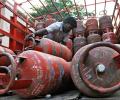
Delhi Police arrested three men in Mahipalpur for illegally hoarding LPG cylinders and selling them at inflated prices. The raid uncovered a large number of domestic and commercial cylinders, along with refilling equipment.
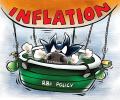
The Reserve Bank of India has increased its retail inflation projection for 2026-27 to 5.1 per cent, up from an earlier estimate of 4.6 per cent. This revision is primarily attributed to mounting input costs, driven by the pass-through of higher global energy prices to domestic petrol and diesel rates, which have seen significant increases since May.
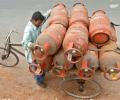
Argentina has significantly increased its LPG exports to India to help mitigate shortages caused by the ongoing conflict in West Asia. This partnership is becoming increasingly important for India's energy security.
Delhi Police have dismantled an illegal LPG cylinder hoarding and black marketing operation in Bawana, arresting one individual and seizing 75 cylinders.
How widely is LPG used around the world? In 2022, the average LPG consumption across 190 countries stood at 56.33 thousand barrels per day. At the very top sits China, consuming a massive 2,457.39 thousand barrels per day, making it the world's largest LPG user by a wide margin. At the other end of the spectrum is Burundi, which recorded zero LPG consumption during the same year. The LPG consumption indicator is available for the period 1980 to 2023.

Despite decades of efforts towards energy transition, oil will remain the critical energy source for all nations for some decades. We can hope for peace opening the Strait of Hormuz, but must prepare for war closing it, points out former foreign secretary Ranjan Mathai.
Indore authorities have filed a criminal case against the operator of an illegal LPG warehouse after discovering 66 cylinders and refilling equipment.

India significantly increased piped natural gas (PNG) connections in March as the government accelerates the expansion of cleaner fuel networks amid global supply disruptions.

India's wholesale price inflation surged to 8.30 per cent in April, up from 3.88 per cent in March, primarily driven by a significant increase in the prices of fuel, power, and crude petroleum, according to data from the commerce and industry ministry.
The District Supply Department in Nanded conducted a raid on a residence, uncovering an illegal stockpile of LPG cylinders and initiating legal action against the individual involved.
Delhi Police busted an illegal LPG cylinder storage unit in Rajpur Khurd, arresting two individuals and seizing 223 cylinders. The facility was operating without a valid license, posing a safety risk to nearby residents.
Delhi Police have dismantled two illegal LPG hoarding and refilling operations in separate raids across the city, seizing a total of 248 cylinders and apprehending five individuals involved in the illicit activities.

'It would be similar to what happened during COVID-19.' 'They are not just losing income, but being pushed into distress.'

The government has assured citizens that there is no need to panic book LPG cylinders, as uninterrupted supply to households is being ensured despite the ongoing conflict in West Asia.

Around 2 million commercial and domestic LPG cylinders will be required to meet demand from hotels, restaurants, and roadside eateries during the upcoming Char Dham Yatra 2026, according to Prajapati Nautiyal, Officer on Special Duty (OSD) for the Char Dham Yatra Administration Organisation.
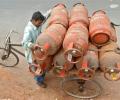
The canteen at the Sports Authority of India's headquarters in Delhi has suspended operations due to a vendor complaint about LPG supply shortages, though sources suggest pricing disputes are also a factor. This closure primarily affects staff, as athletes' meals are provided separately.

The government has mandated that cooking gas LPG supply to households will be discontinued if consumers fail to switch to piped natural gas where such connectivity is available, under a new order aimed at accelerating gas network expansion and reducing reliance on a single fuel.
Researchers at CSIR-NCL have developed a technology for producing dimethyl ether (DME) as an alternative to liquefied petroleum gas (LPG), potentially reducing India's reliance on imports and enhancing energy security.
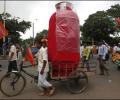
Delhi Police have dismantled multiple illegal LPG storage and refilling units across the city, seizing a large number of cylinders and apprehending several individuals involved in the illicit operations.

The Indian government has reassured citizens that the country has sufficient reserves of petrol, diesel, and LPG, and that refineries are operating at high capacity despite global supply chain disruptions. They have urged citizens to avoid panic buying and hoarding.

Police in Bidar, Karnataka, have arrested four individuals and seized 105 LPG cylinders in connection with the alleged black marketing of cooking gas.
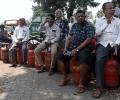
India restricts subsidised LPG connections for households with piped natural gas (PNG) to ensure equitable distribution and address global energy supply concerns, pushing for faster PNG adoption.

'Why are the political leaders saying everything is normal?'
Responding to concerns raised by Leader of the Opposition Rahul Gandhi in the Lok Sabha, Petroleum Minister Hardeep Puri said it is the foremost priority of the government that the kitchens of over 33 crore families, especially the poor and the underprivileged, do not face any shortage of gas.

The harsh truth is that the US is no longer a reliable partner, cautions Ramesh Menon.

Two more Indian-flagged LPG tankers have begun their journey from the Persian Gulf, navigating the Strait of Hormuz amidst regional conflict, following disruptions caused by recent tensions in the Middle East.
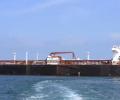
Despite ongoing tensions in West Asia, the successful arrival of the LPG carrier 'Nanda Devi' in Gujarat ensures a steady supply of liquefied petroleum gas to India, highlighting the country's efforts to secure its energy needs.

The Indian government has increased measures to secure fuel and gas supplies following the Strait of Hormuz closure, urging citizens to avoid panic buying. Refineries are operating at high capacity, and sufficient stocks of petrol and diesel are available nationwide.

Government sources indicate a potential increase in petrol and diesel prices due to rising global crude oil costs and losses incurred from a prolonged freeze on retail rates.

Tamil Nadu Petroleum Dealers' Association urged people not to panic-buy petrol or diesel, stating that 14 terminals in Tamil Nadu have enough stock to replenish 7,000-plus retail outlets as per their demand.

If the conflict continues for a prolonged period, State-run oil companies may have to review retail fuel prices accordingly.
The Indian government has revised its natural gas allocation priorities, placing LPG production alongside CNG and piped cooking gas at the top, due to disruptions in imported gas supplies caused by the conflict in West Asia.

The government has withdrawn most provisions of the emergency natural gas supply regulation order imposed during the West Asia conflict after liquefied natural gas (LNG) shipments through the Strait of Hormuz resumed following a ceasefire.

The reopening of the Strait of Hormuz, following a ceasefire agreement between the US and Iran, is expected to significantly ease India's crude oil supply risks, lower freight costs, and reduce inflationary pressures, as global oil prices have already dropped.

An Indian-flagged crude oil tanker, Jag Laadki, safely sailed from the UAE's Fujairah port despite an attack on the terminal and is scheduled to reach India. The Indian government is working to ensure the safe passage of remaining Indian-flagged vessels in the region.

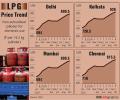
Indian Oil raised prices of commercial LPG, sold in 19 kg cylinders, to Rs 1,108.5 per cylinder on Nov 1, from Rs 1,095.24 per cylinder on Oct 1. Commercial LPG is not subsidised and oil companies revise their prices in line with international prices on the first of every month. "Commercial LPG prices are expected to go up in December too," said an IO official. But prices of automobile LPG have come down by around 5.34 per cent on Nov 1 compared with prices on Oct 1.

24 Indian-flagged vessels with 677 Indian seafarers were currently located west of the Strait of Hormuz, and four vessels with 101 Indian seafarers were stationed east of the strategic waterway.

An India-flagged LPG tanker, Jag Vikram, has successfully crossed the Strait of Hormuz following a temporary ceasefire between the United States and Iran, marking a significant development for India's energy security.
